The AWS Foundational Technical Review (FTR) is how AWS qualifies a software product before it joins AWS partner programs. In June 2026, AWS changed how it works. Partners now submit a SOC 2 Type II report or a Well-Architected Framework Review report, and AWS returns approval or feedback within minutes.
That change makes the FTR much faster for teams that are ready. It also moves the work. The review itself takes minutes, so the preparation decides whether you pass.
This guide covers what the AWS Foundational Technical Review is, how it works in 2026, how to pass it the first time, and what it unlocks afterwards.
What the AWS Foundational Technical Review is
AWS describes the FTR as a review of your software against AWS Well-Architected best practices that helps you “identify and remediate risks” (AWS). It applies to software companies on the Software Path of the AWS Partner Network, whether your product runs as SaaS or your customers deploy it in their own accounts.
According to AWS, the FTR costs nothing, returns results within minutes, and stays valid for two years from approval. An approved FTR gives your solution:
- A Qualified Software badge and a listing in AWS Partner Solutions Finder
- Eligibility for AWS partner programs, funding benefits and marketing resources
- Access to AWS Specializations, including AWS Competencies
- Eligibility for the AWS ISV Accelerate Program
For how the Software Path compares with the services tiers, see our guide to AWS Partner tiers in 2026.
How the AWS Foundational Technical Review works in 2026
Since June 16, 2026, AWS Partner Central accepts two kinds of evidence for the FTR. AWS checks the report automatically and returns approval or specific feedback within minutes. If a control fails, AWS tells you which one and how to fix it, and you can resubmit as many times as you need.
Prerequisites for the AWS Foundational Technical Review
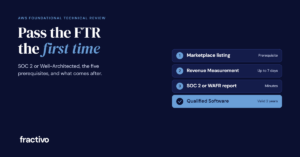
Before you can upload anything, your solution must clear five prerequisite checks on the Validation tab in Partner Central. According to AWS’s FTR instructions, the checks run in order, and each one must pass before the next:
- The solution is linked to exactly one AWS Marketplace product.
- It contains no products outside AWS Marketplace.
- The linked product is software: SaaS, AMI, container or machine learning. Services-only solutions aren’t supported.
- The Marketplace product carries the Deployed on AWS badge, meaning it runs on AWS infrastructure.
- Partner Revenue Measurement is enabled for the product. AWS notes that measurement data can take up to 7 days to appear.
In other words, a Marketplace listing and Partner Revenue Measurement now come before the FTR. Teams that treat the listing as a later step will find themselves blocked here.
The two routes: SOC 2 or Well-Architected
You then upload one PDF, up to 3 MB. AWS checks it against these criteria:
| What AWS checks | SOC 2 Type II report | Well-Architected Framework Review report |
|---|---|---|
| Age | Issued within the last year | Less than one year old |
| Result | An unqualified auditor opinion | Zero high-risk issues in the Security, Operational Excellence and Reliability pillars |
| Scope | Your AWS-hosted components and the specific solution are in scope | The solution is named in the workload name or description |
| Other | Covers the Security and Availability trust services criteria | Completed in the AWS Well-Architected Tool, with the reviewer’s full name and email recorded |
If you already hold a recent SOC 2 Type II report that covers your AWS workload, that is usually the faster route. If you don’t, the Well-Architected route is open to everyone. You can run the review yourself in the AWS Well-Architected Tool, or with help from AWS, a Well-Architected partner or an ISV tool.
How to pass the AWS Foundational Technical Review the first time
Because AWS reviews the report in minutes, most failures come from the evidence itself. Here is how we prepare clients.
Get the Marketplace prerequisites done early
First, list your product on AWS Marketplace and link it to the solution in Partner Central. Then enable Partner Revenue Measurement and allow a week for the data to show. These steps sit with different teams, so start them before anyone touches the report.
Check your SOC 2 scope before you upload
A SOC 2 report can be current and clean and still fail. That happens when its system description doesn’t mention your AWS-hosted components or the specific product you are submitting. So read the scope section with your auditor first. If your product isn’t named, ask whether the next report can include it.
Clear the high-risk issues in a Well-Architected review
For the Well-Architected route, any high-risk issue in Security, Operational Excellence or Reliability blocks approval. Therefore, run the review early, fix the high-risk items, and then generate the final report. Also name the solution in the workload name or description, and record the reviewer’s full name and email.
Common reasons a submission comes back
- The report is more than a year old.
- The SOC 2 scope doesn’t cover the AWS-hosted workload or the named product.
- The Well-Architected review still shows a high-risk issue in one of the three checked pillars.
- The solution in Partner Central links to more than one Marketplace product, or includes a product that isn’t on Marketplace.
- Partner Revenue Measurement was switched on too recently for the data to appear.
If the report comes back, read the feedback, fix the specific control and resubmit. Each attempt is checked again within minutes.
What comes after the AWS Foundational Technical Review
An approved FTR qualifies your product. It doesn’t, on its own, create pipeline. What you do next decides whether the badge turns into revenue.
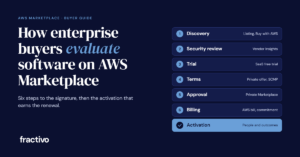
Use the listing you already built. Because the FTR now requires an AWS Marketplace listing, you have a buying path in place. Next, build the motion around it: private offers, target accounts and contract terms legal will accept. Our guide to how enterprise buyers evaluate software on AWS Marketplace covers what buyers look for.
Decide on a Specialization. The FTR opens the door to AWS Specializations, including AWS Competencies. A Competency tells enterprise buyers that AWS has reviewed your customer results in a specific area. See our AWS Competency guide for what it takes.
Consider ISV Accelerate. The FTR also makes you eligible for the ISV Accelerate Program, AWS’s co-sell program for software companies. However, AWS decides which opportunities its sellers engage on. A badge and a program help, and the quality of your co-sell opportunities still matters most. Our post on the AWS Opportunity Quality Score explains how AWS now rates every opportunity.
Plan the renewal. An approved FTR expires two years after approval. Partner Central sends reminders 90, 60 and 30 days before, and you can submit new evidence from 90 days out. For the SOC 2 route there is no grace period, so line up your next audit report before the expiry date. You can also switch between SOC 2 and the Well-Architected route at renewal.
FAQ
Is there an AWS FTR tool?
The FTR itself runs in AWS Partner Central, on the Validation tab of your solution. If you take the Well-Architected route, you complete the review in the AWS Well-Architected Tool, then upload the report to Partner Central.
How long does the AWS Foundational Technical Review take?
The review returns a result within minutes. However, the prerequisites take longer. Partner Revenue Measurement data can take up to 7 days to appear, and a SOC 2 audit or a Well-Architected review takes weeks if you don’t already have one.
Can we pass the FTR without a SOC 2 report?
Yes. A Well-Architected Framework Review report less than a year old, with no high-risk issues in Security, Operational Excellence or Reliability, is accepted instead. You can run that review yourself.
Do we need AWS Business Support to pass?
Not for the FTR itself. The current Software FTR guide in Partner Central lists the five prerequisites and the report checks, and a support plan isn’t among them. Earlier versions of the FTR asked about Business Support for production workloads, which is why many teams still expect it. Your customers may still expect a support plan, so treat that as a commercial decision.
What if we disagree with the result?
AWS’s guide says you can contact AWS Partner Support, which can ask an AWS Partner Solutions Architect to review your submission and results.
Is the AWS Foundational Technical Review free?
Yes. AWS says you can complete it at no cost.
Work with Fractivo
Fractivo helps software companies get through the FTR, then turn it into something that sells: a Marketplace listing buyers use, an AWS Competency, and co-sell opportunities AWS sellers can act on. If you’re planning your FTR, talk to us.
Sources
- FTR overview, AWS
- Requesting an FTR for your solutions, AWS Partner Central Builder Guide
- Partner Central validates the FTR in minutes, AWS, June 16, 2026
AWS’s Software FTR guide in Partner Central (partner sign-in required, last updated October 26, 2026) confirms the two-year validity, the five prerequisites and the renewal reminders.